Description/Usage
8hp
This module can be used in a number of ways:
Timbre generator
CV Pattern generator/sequencer
Controllable pseudo-random noise generator
It is based on ideas presented in an AES article by Ralph W. Burhans
Using the switches, pots and signal input, you can create patterns as simple or as complex as you like.
It is not a 6 stage sequencer as most settings enable more than one channel to be active at once and the CV output is a sum of the voltages set by the pots connected to the active stages.
The switches enable extremely long patterns to be generated. The signal input allows you to change and randomise patterns on the fly, but it fun to flick the switches back’n’forth (centre is off); sometimes you might even return to a previous pattern. It is also fun to feedback a gate output into the signal input to create shorter loops that can be altered with the switches as well.
As a timbre generator, it can add harmonics to sine waves or step in and out of pseudo random noise as the signal and/or clock are CV controlled. It might be good to feed the output to a VCF to smooth some of the edges, but it depends on how noisy you want it.
DIY
Build Guide & BOM (pdf)
Panel Template
Stencil Gerbers
Description/Usage
8hp
This module can be used in a number of ways:
Timbre generator
CV Pattern generator/sequencer
Controllable pseudo-random noise generator
It is based on ideas presented in an AES article by Ralph W. Burhans
Using the switches, pots and signal input, you can create patterns as simple or as complex as you like.
It is not a 6 stage sequencer as most settings enable more than one channel to be active at once and the CV output is a sum of the voltages set by the pots connected to the active stages.
The switches enable extremely long patterns to be generated. The signal input allows you to change and randomise patterns on the fly, but it fun to flick the switches back’n’forth (centre is off); sometimes you might even return to a previous pattern. It is also fun to feedback a gate output into the signal input to create shorter loops that can be altered with the switches as well.
As a timbre generator, it can add harmonics to sine waves or step in and out of pseudo random noise as the signal and/or clock are CV controlled. It might be good to feed the output to a VCF to smooth some of the edges, but it depends on how noisy you want it.
DIY
Build Guide & BOM (pdf)
Panel Template
Stencil Gerbers
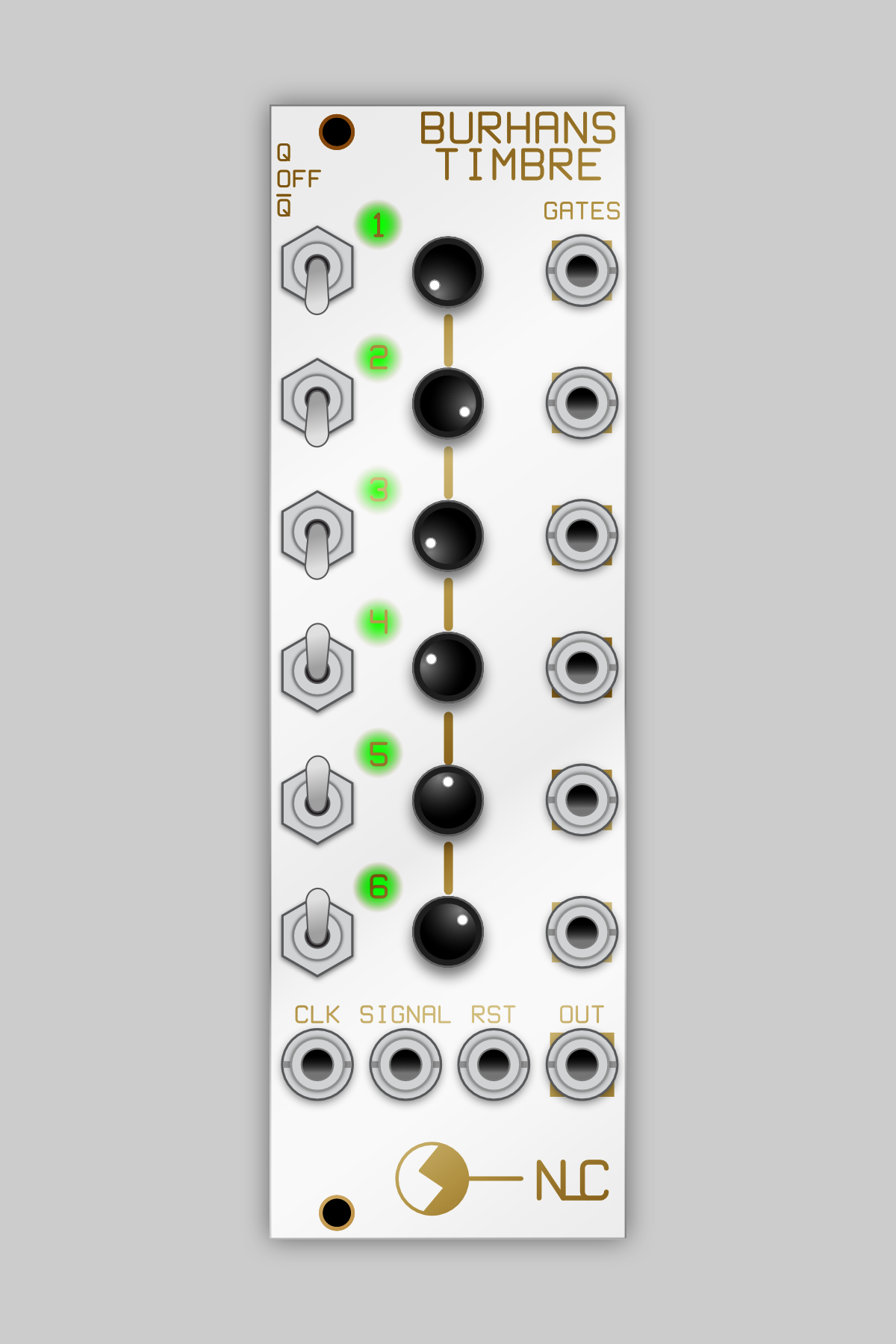 Image 1 of 6
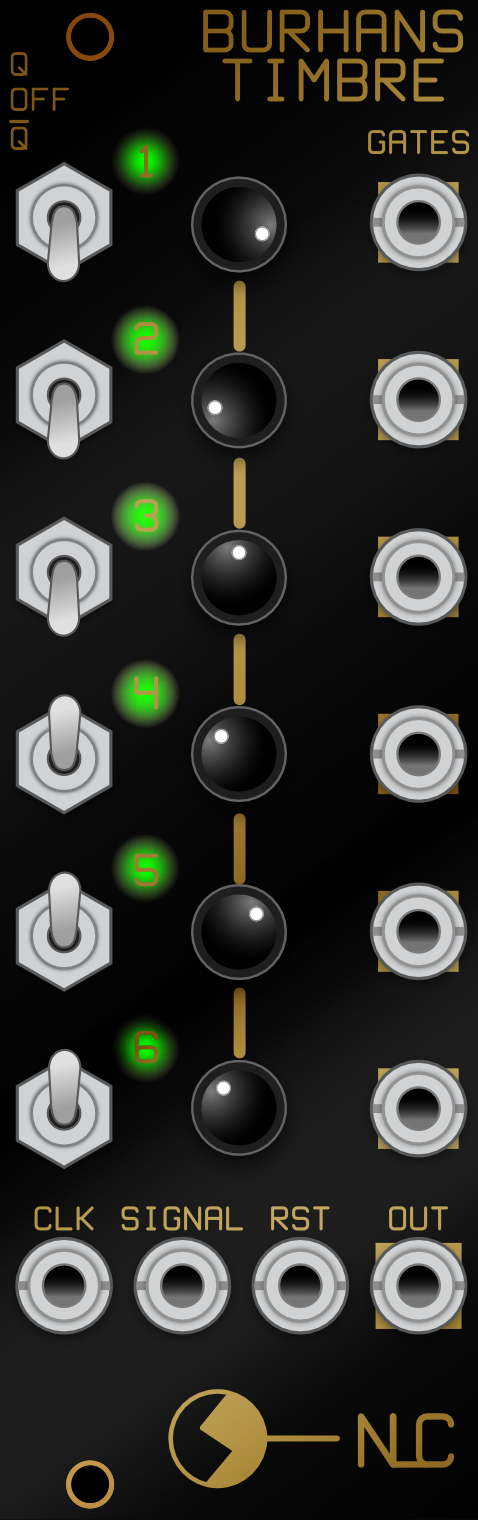 Image 2 of 6
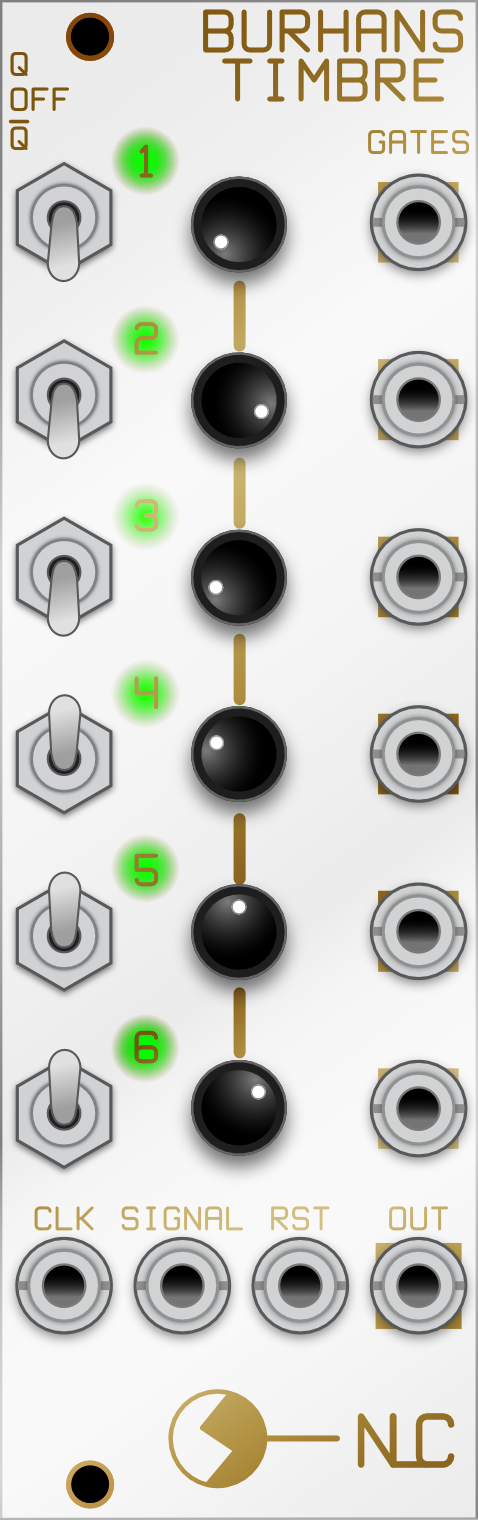 Image 3 of 6
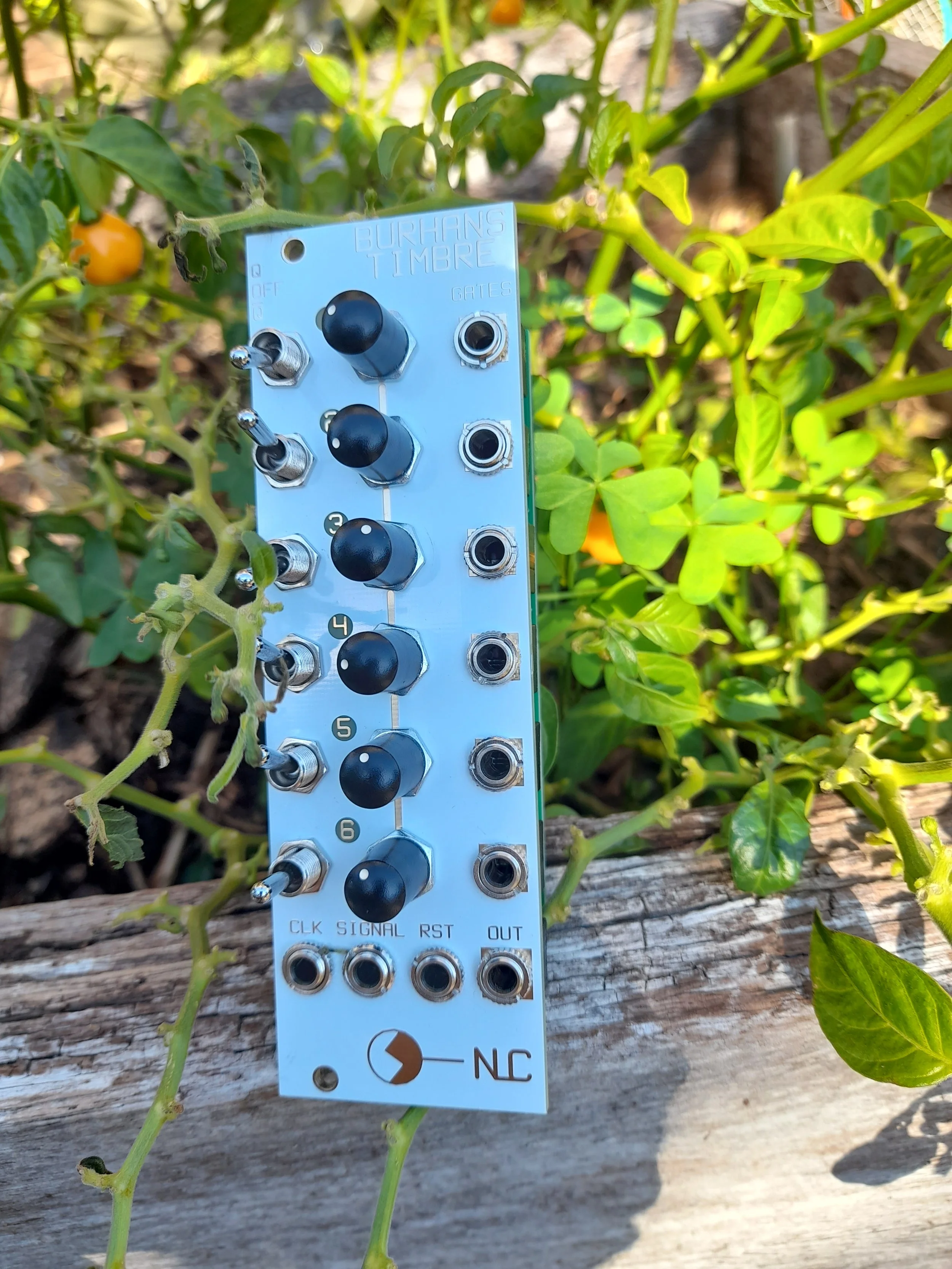 Image 4 of 6
 Image 5 of 6
 Image 6 of 6